

Reviewed · MATOBO HILLS TOURS
Khami Ruins Day Trip
Khami Ruins is Zimbabwe’s second-largest stone-built monument, yet it receives far less attention than Great Zimbabwe. That makes the site feel like a real archaeological find, with broad dry-stone platforms, decorated walls, narrow passageways, and the remains of a 16th-century capital spread across the bush near Bulawayo. I like the private transport and the chance to explore at your own pace. I also like that guides such as Lesley can explain what you are seeing instead of leaving you to decode the walls alone.
The main drawback is simple: admission fees and taxes are not included in the $80 price, so you should budget for those separately. The visit is also focused on archaeology rather than a long list of attractions, so it suits curious history fans more than anyone seeking a packed day of entertainment.
Key points about the Khami Ruins excursion
- Khami is about 30 minutes from central Bulawayo, making it an easy half-day outing.
- The Hill Ruin contains the Mambo, or chief’s residence, the most important structure in the complex.
- Chevron and chequered stone designs give the walls a distinctive look not found at every Zimbabwe site.
- Private transportation keeps the visit flexible, with only your group taking part.
- Lesley has guided visitors from hotel pickup through the ruins, while a local site guide may also explain the details on arrival.
- Snacks and bottled water are included, but entrance charges are extra.
Why Khami matters in Zimbabwe’s history
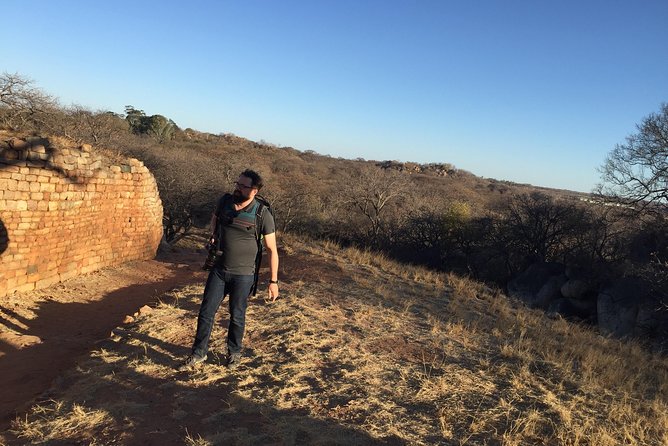
Khami occupies an important place between Great Zimbabwe and the later period of Zimbabwean history. It was the capital of the Torwa Dynasty in the 16th century, and its stonework shows how builders continued and adapted the country’s dry-stone tradition after the era associated with Great Zimbabwe.
That connection matters because Khami is not simply a pile of old walls. The arrangement of platforms, residences, passageways, and decorated barriers gives you clues about how power and daily life were organized. The chief lived in the Hill Complex, while much of the wider population lived in daga huts made from cobwork. Those huts have not survived in the same way as the stone structures, but the walls help you picture a settlement with clear social and practical divisions.
Khami is also important for archaeology. The site was not badly damaged by treasure hunters, so its layers remain unusually useful to researchers. You can think of the ruins as a record built up over time, not only as a grand monument. That undisturbed setting gives the site scientific value and helps explain why it is recognized as a UNESCO World Heritage Site.
For you, the result is a visit with more substance than spectacle. The ruins do not depend on towering buildings or restored rooms. Their appeal comes from reading the plan of the settlement and noticing how the builders used granite, height, decoration, and movement through the site.
More days out in the Matobo Hills:
- The Best of Matobo
★ 5.0 · 39 reviews - Matobo Rhino Encounter
★ 5.0 · 33 reviews - Matobo Hills Day Trip with Rhino Tracking
★ 5.0 · 22 reviews
The 30-minute journey from Bulawayo
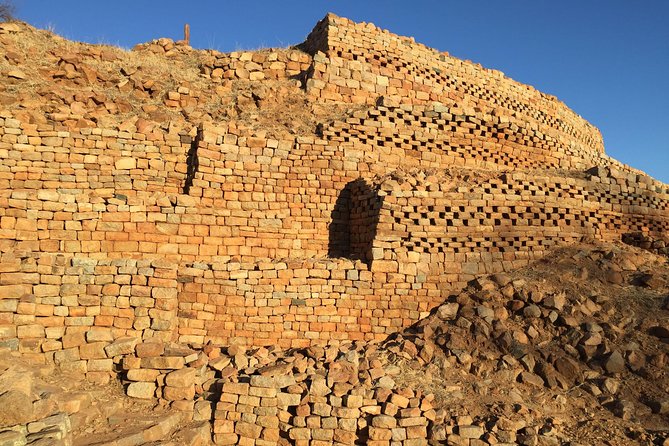
The excursion begins with pickup, and the drive from central Bulawayo takes about 30 minutes. That short transfer is one of the tour’s strongest points. You can see Khami without giving up an entire day, and you avoid arranging a separate taxi or trying to coordinate transport on your own.
Your group travels in an air-conditioned vehicle, with private transportation included. This is useful in Zimbabwe’s heat, particularly when you are visiting a site where much of the experience takes place outdoors. Bottled water and snacks are also provided, a small detail that matters more once you are walking between the ruins and spending time in the open air.
The full outing usually takes about two to four hours, with around three hours devoted to the ruins. The exact length can vary because this is a private activity. If you want to stop and examine every wall, ask questions, or make a careful record for photography or video, the private format gives you more room than a large group departure.
Pickup timing has received strong praise, including a smooth hotel pickup arranged by Lesley. You should still confirm the meeting point and start time when booking, since the transfer and local conditions affect the schedule.
Entering the Torwa Dynasty capital
The first sight is a complex series of platforms made from dry-stone walls. The stones were fitted without mortar, and the builders created more than simple enclosures. Walls divide spaces, guide movement, and mark areas that were likely important to the settlement’s social order.
Your guide can help turn those features into a readable plan. Without explanation, a low wall may look like a low wall. With context, you begin to see how the platforms formed residences, ceremonial areas, routes, and protected spaces. The value of a guide is especially clear at Khami because many of the original daga huts are gone, leaving the stone framework to do most of the talking.
The site includes the Vlei, Monolith, and Passage platforms. Each adds a different piece to the complex. You will also find narrow passageways and perambulatory galleries, which are among the most memorable parts of the visit. These routes make the ruins feel designed for movement rather than built as one open block.
I would take your time here. Look at how the walls bend, where one path narrows, and how the platforms relate to one another. The visit rewards attention more than speed. A quick circuit can show you the scale of Khami, but a slower walk gives you a better sense of how the settlement worked.
The Hill Complex and the Mambo
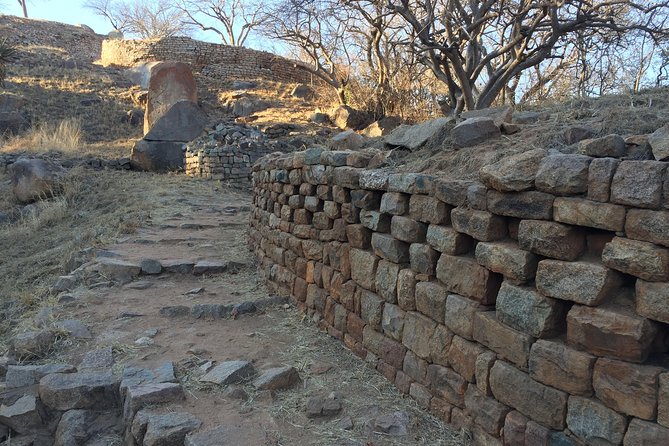
The Hill Ruin, also called the Hill Complex, contains the Mambo, the residence of the chief. This is the central feature for anyone interested in the political side of Khami. The location suggests importance, and the raised setting helps you understand how the settlement separated the ruling household from the wider population.
Your guide can point out the relationship between the Hill Complex and the surrounding platforms. The ruins do not offer a furnished palace or reconstructed royal chambers, so you need to use the walls, terraces, and position of the site to imagine the former capital. That may sound less immediate than visiting a restored building, but it also leaves room for a more honest look at the past.
The Hill Ruin is a good place to pause and ask questions. You can ask how the Mambo’s residence differed from ordinary homes, how the platforms were used, and what archaeologists can establish from the remaining structures. Guides have been praised for explaining the history thoroughly, and that background makes the upper complex far more meaningful.
If you are recording a video or taking photographs, allow enough time for the Hill Complex rather than treating it as a quick stop. One visitor arranged a full circuit of the structures for a YouTube channel, and the three-hour visit gave enough time to cover the major buildings and platforms.
A few more Zimbabwe days to weigh up
- Victoria Falls: Chobe National Park Day Trip with Lunch
★ 4.7 · 518 reviews - Chobe Day Trip from Victoria Falls, Zimbabwe
★ 4.6 · 250 reviews - Chobe Day Trip From Victoria Falls Zimbabwe
★ 4.5 · 196 reviews - Chobe Full Day Trip From Victoria Falls
★ 4.5 · 135 reviews
Chevron walls, passageways, and stonework
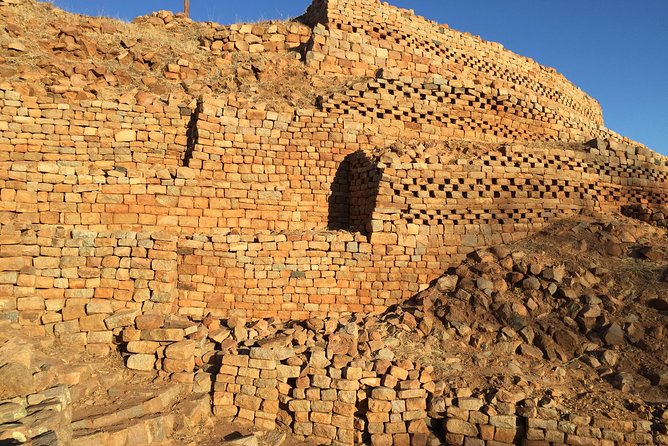
Khami’s decoration is one of the clearest reasons to visit. Sections of the walls feature chevron and chequered patterns, giving the dry-stone construction a visual character beyond its practical purpose. These details show careful workmanship and reward close inspection.
Do not rush past the walls because they appear repetitive from a distance. The patterned sections are easier to appreciate when you stand close enough to see the arrangement of the stones. The narrow passageways and galleries add another layer, since they make you think about how people moved through the settlement and how access may have been controlled.
The craftsmanship is also valuable as a point of comparison with Great Zimbabwe. Khami is smaller, but it belongs to the same broad tradition of impressive stone construction. Its forms are not identical, and that difference is part of the lesson. You are seeing a later capital with its own arrangement, decoration, and social layout.
This is where a local site guide can be particularly helpful. One excursion included an on-site guide who explained the details of the ruin. If that guide is available during your visit, use the opportunity to ask about the wall patterns and the purpose of the various platforms.
What the private format adds
This is a private tour, so only your group takes part. That changes the pace in useful ways. You can spend longer at the Mambo, move quickly through sections that interest you less, or ask for a fuller explanation of one structure without holding up a busload of people.
The format also makes the trip suitable for different kinds of visitors. A history enthusiast can use the time for detailed questions. A photographer can plan a slower circuit. Someone with only a half-day free in Bulawayo can get a focused archaeological visit without adding unrelated stops.
There is a trade-off. A private tour does not automatically mean that every possible site service is included. Entrance fees and taxes remain separate, and the excursion has a fairly narrow focus. If you want several attractions in one day, you may need to arrange additional plans.
The group discount may improve the value for families or small parties. At $80 per person, the price is easier to assess when you consider what is included: hotel pickup, private transport, air conditioning, snacks, bottled water, and a guide. You are paying for convenience and interpretation as much as for the drive itself.
Since the admission ticket is not included, check the current entrance cost before you leave. That lets you compare the total price fairly and avoids an unpleasant surprise at the site.
Who will get the most from this outing
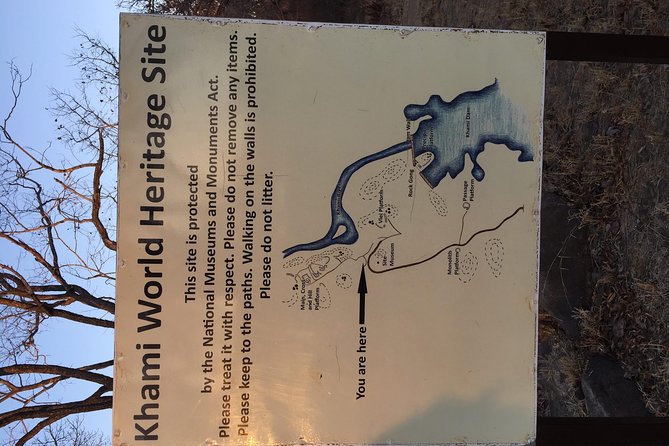
I would choose this excursion if you have a strong interest in archaeology, Zimbabwean history, or traditional stone building. It is also a smart addition to a Bulawayo stay because the drive is short and the visit can fit into a morning or afternoon.
You will get the most from it if you enjoy looking closely. Khami is not a polished museum with labels on every object. Much of the pleasure comes from noticing the shape of the walls, the pattern of the stonework, and the relationship between the Hill Complex and the lower platforms.
The tour also suits you if you prefer a private setting. You can ask questions freely, and the guide can give more attention to the areas that interest you. The air-conditioned vehicle is another advantage if you want a comfortable transfer in warm weather.
I would think twice if your main goal is dramatic architecture that remains almost fully intact. Khami is an archaeological site, and parts of the settlement require imagination. The information makes the walls meaningful, but the physical remains are still partial.
Practical points before you book
Plan on roughly three hours for the main experience, but allow two to four hours overall. The timing can depend on the pace of your group, the transfer, and the amount of explanation you want.
Wear something suited to an outdoor archaeological visit and bring a camera if you enjoy stone patterns and broad views across the site. Specific clothing requirements are not provided, so practical walking clothes are the sensible choice.
Confirmation is provided at booking, and most people can take part. The activity requires good weather, and it also requires a minimum number of participants. If poor weather or insufficient bookings force a cancellation, you are offered another date or a full refund.
You can cancel for a full refund up to 24 hours before the start time. Changes or cancellations made less than 24 hours ahead are not accepted for a refund. The cut-off follows local time in Zimbabwe.
Should you book the Khami Ruins day trip?
I would book it if you are staying in Bulawayo and want a focused, well-explained look at one of Zimbabwe’s important archaeological sites. The short drive, private air-conditioned vehicle, hotel pickup, and three-hour visit make it practical, while the Hill Complex, decorated walls, and passageways give the outing real substance.
The $80 price is reasonable for a private half-day transfer with snacks, water, and guiding, but remember that admission fees and taxes are extra. Book this tour for archaeology and context, not for a packed sightseeing schedule. If that matches your interests, Khami offers a rewarding look at a lesser-known UNESCO site and a useful link between Great Zimbabwe and later Zimbabwean history.
FAQ
How long does the Khami Ruins tour take?
The experience takes about two to four hours overall, with the main visit to Khami Ruins lasting about three hours.
How far is Khami Ruins from Bulawayo?
Khami Ruins is about 30 minutes by car from central Bulawayo.
Is hotel pickup included?
Yes. Pickup is offered, and hotel pickup has been arranged for this excursion.
Are entrance fees included in the $80 price?
No. Admission fees, taxes, and other required charges are not included.
Is the tour private?
Yes. Only your group participates in the private tour or activity.
What happens if the tour is canceled because of weather?
You are offered a different date or a full refund if poor weather causes the experience to be canceled.
Just added around Zimbabwe
- Zimbabwe: Sundowner Cruise (Standard) Zambezi River★ 4.8 · 5 reviews
- Zambezi River: Kid-Friendly Whitewater Rafting★ 5.0 · 3 reviews
- Zambezi 3hr Game Drive★ 4.6 · 5 reviews
- Victoria Falls Village Cultural Tour – Authentic Experience★ 5.0 · 3 reviews
- Zambezi National Park Private Wildlife Safari (4 – 10 hours)★ 4.9 · 9 reviews
- Victoria Falls: Whitewater Rafting Experience★ 4.5 · 4 reviews
- Victoria Falls: Zambezi River White Water Rafting Experience★ 5.0 · 7 reviews
- Victoria Falls: Village Life Experience★ 4.7 · 6 reviews
Matobo Hills Tours, compared.
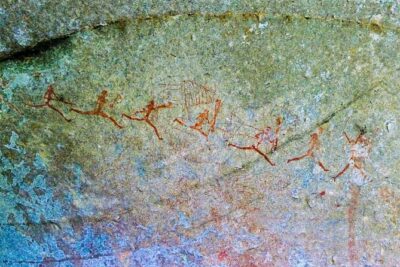

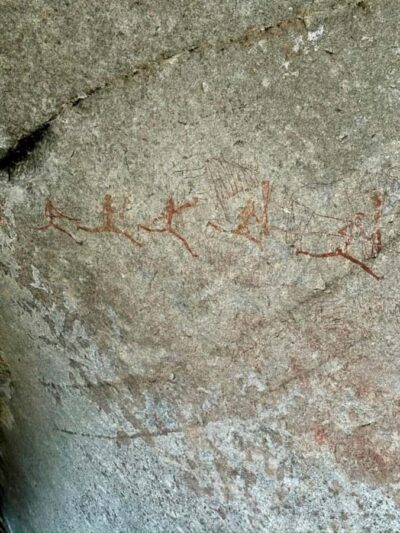
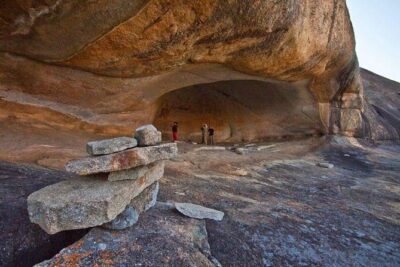
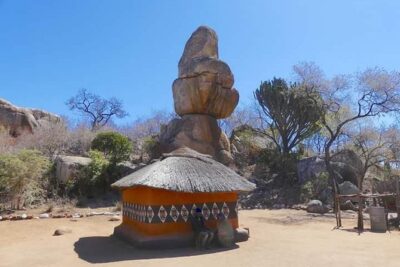
Khami Ruins & Matopos Silunguzi Village Day Tour!
Read our review →
Silunguzi Matopos Village & Rock Paintings Visit !
Read our review →Browse the lists this tour appears in