
Reviewed · MATOBO HILLS TOURS
Matobo Rhino Encounter
Matobo Rhino Encounter puts you on foot in the bush, close to white rhinos and far from the usual quick photo stop. You’ll track animals with local guides and park rangers, learn how plants were used for medicine, and visit a cave decorated with paintings made thousands of years ago. The small group, capped at eight, is a major plus.
I like two things especially: the day connects wildlife with human survival skills, and the $120 price includes hotel transfers, lunch, bottled water, refreshments, digital photos, and the guiding team. You also get real time with the rhinos, not just a hurried sighting from a vehicle. The main consideration is the afternoon start and long walking period, so bring good closed-toe shoes, water-friendly patience, and protection from sun and insects.
Key points to know before booking
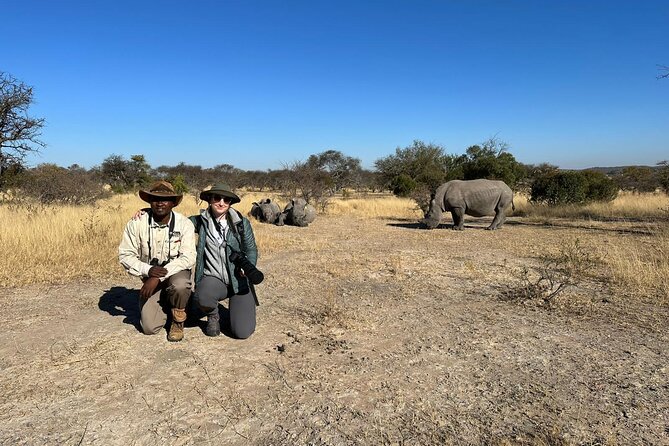
- Rhino tracking is done on foot: You get closer to the animals’ world while learning to read footprints, dung, wind, and plant life.
- The group is limited to eight people: That makes it easier to hear the guide and ask questions during the bush walk.
- The afternoon starts at 1:00 pm: Pickup, park time, the cave visit, lunch, and sunset activities fill roughly five to six hours.
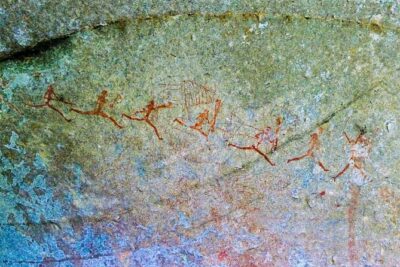
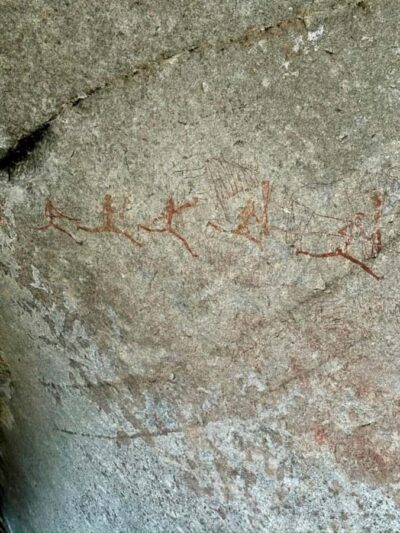
- Ancient cave art adds a human story: A large rock cave contains bushman paintings dating back thousands of years.
- The price covers most major costs: Transfers, lunch, drinks, digital photos, and refreshments are included.
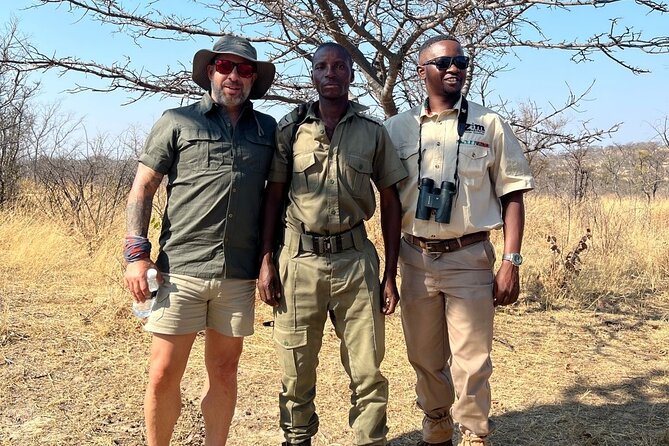
- Local guides and rangers lead the day: Blessing and Bongani have organized this outing, while park rangers help protect the endangered rhinos.
Walking into Matobo’s rhino country
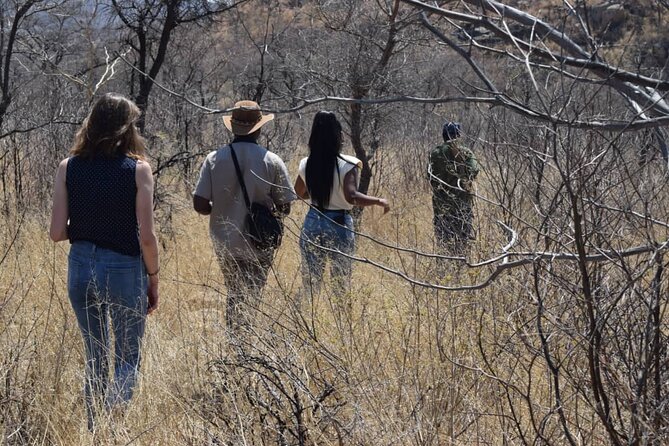
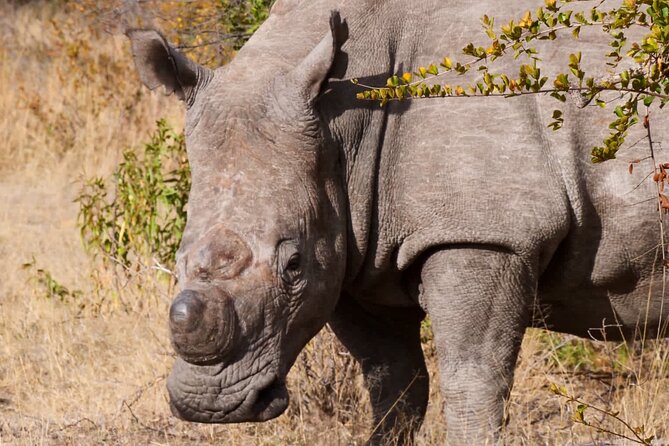
The main draw is simple: you leave the vehicle behind and follow signs of white rhinos through Matobo National Park. This changes the pace of the safari. Instead of scanning the bush from a seat, you stop to read the ground, watch the wind, and listen for clues.
Your guide explains how to identify footprints and animal dung, along with the practical uses of local plants. That may include learning which plants served as natural remedies for problems such as snake bites. The point is not to turn you into a bush expert in one afternoon. It is to show you how much information is written into the soil, leaves, smells, and sounds around you.
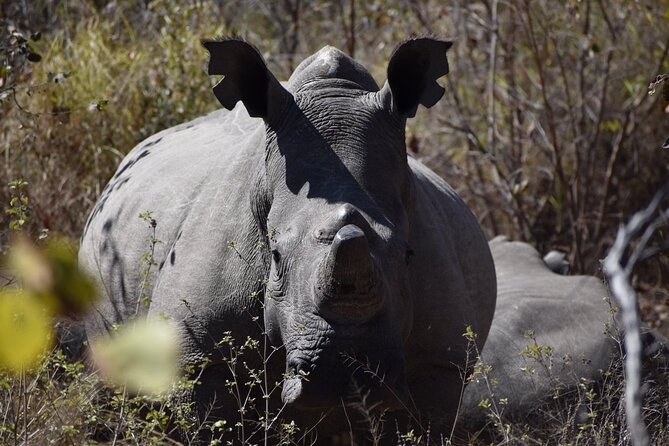
The rhino encounter is handled with the help of the guide’s understanding of animal behavior and wind direction. You should expect to approach carefully, with attention to where the wind is blowing. That makes the sighting feel earned. It also gives you a better sense of why wildlife tracking depends on patience and caution rather than luck alone.
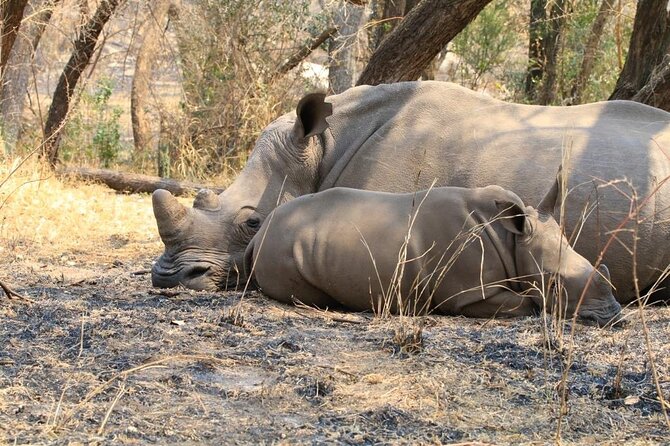
White rhinos are the star, and the experience is designed to bring you close to them in their natural setting. One account describes spending about 25 minutes with two rhinos soon after entering the park, enough time for photographs and video rather than a quick glimpse. Sightings are never something any wildlife outing can promise, but this activity is built around tracking them rather than simply hoping to spot them from the road.
More close-up animal encounters near Zimbabwe:
- Lion & Wildlife Sanctuary Excursion Victoria Falls
★ 4.5 · 31 reviews - Matobo Hills Day Trip with Rhino Tracking
★ 5.0 · 22 reviews - Baobab-Sunrise-Sunset-Vulture-Moonlight Safaris, 4 Options
★ 5.0 · 18 reviews
Why the small group matters
A maximum of eight participants is one of the strongest practical features here. A larger group can turn a quiet bush walk into a noisy procession, with people spread out and questions lost at the back. With eight or fewer, you have a better chance of staying close to the guide and hearing explanations about tracks, plants, and animal behavior.
A small group also helps during the rhino approach. You will still need to follow instructions and keep a respectful distance, but fewer people make it easier for everyone to remain focused. It is a better setup for photography, too. The included digital photos are useful if you want a record of the encounter without spending the whole time managing your own camera.
The group limit does not make the walk private. You are sharing the experience with other people, and the exact pace will depend on the group. Still, the eight-person cap gives this outing a more personal feel than a large coach-based safari.
A 1:00 pm start and the drive to the park
The stated start time is 1:00 pm, with pickup offered from your hotel. One account put the drive to Matobo National Park at roughly 30 minutes, though your actual transfer time will depend on where you are staying and the pickup route.
An afternoon departure has both benefits and drawbacks. You do not need to rise before dawn, and the timing leads naturally toward late-day light and sunset. The final part of the outing includes sundowners and snacks, which can be a pleasant way to finish after the walking and wildlife tracking.
The trade-off is that you lose the cooler early-morning hours. The afternoon sun can be hard on you during an open bush walk, so a sun hat, sunscreen, comfortable trousers, and insect repellent are sensible. The organizers specifically recommend khakis and closed-toe shoes. Take that advice seriously. This is not a flip-flop activity.
The supplied details describe the outing as both approximately five hours and about six hours. In practical terms, you should keep most of the afternoon free, from the 1:00 pm pickup through the sunset stop. Do not schedule a tight evening commitment immediately afterward.
Learning to read footprints, plants, and dung
The bush-skills portion gives the activity its character. You learn to look for signs that are easy to ignore when you are focused only on large animals. Footprints can suggest what passed through an area. Dung can offer clues about animal presence. Plants can tell a story about how people survived in a dry and difficult setting.
The guide also places these skills in the context of early human survival. You hear how our ancestors found useful plants and tracked animals in a demanding African savannah environment. This is not a museum lesson separated from the outdoors. The ground and vegetation around you become the teaching material.
I like this part because it gives you a way to keep looking after the rhino sighting. Wildlife trips can lose energy once the headline animal has been found. Here, the activity continues with smaller details: the direction of the wind, a mark in the soil, a plant with a practical use, or a change in the sounds around you.
The information is also valuable because it encourages respect for local expertise. A guide who understands the bush is doing more than pointing out animals. The guide is interpreting a place through knowledge passed down and adapted to the modern conservation setting.
More days out in the Matobo Hills:
- The Best of Matobo
★ 5.0 · 39 reviews - Matopos Half Day Excursion
★ 4.5 · 15 reviews - Khami Ruins Day Trip
★ 5.0 · 6 reviews - Silunguzi Matopos Village & Rock Paintings Visit !
★ 5.0 · 4 reviews
Meeting the rangers who protect the rhinos
Park rangers play an important part in the outing. You meet the people who work to protect these endangered animals, adding a conservation element that is easy to miss on a standard game drive.
This meeting helps explain why the approach must be careful. Rhino viewing is not a petting-zoo encounter and should never be treated as one. The rangers’ work depends on protecting the animals from harm, and your behavior forms part of that effort. Follow every instruction about where to stand, how quietly to move, and when to stop.
The experience gives you a closer look at conservation as daily work. You see the animals, but you also meet people whose responsibility is to keep them safe. That combination makes the rhino sighting more meaningful than a photo alone.
Ancient paintings inside a large rock cave
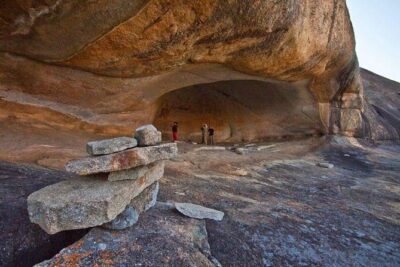
Matobo is not only about wildlife. A major stop is one of the park’s large rock caves, where ancient bushman paintings cover the stone. The paintings are thousands of years old and connect the present-day bush walk with the people who lived in this area long before modern roads, hotels, or safari vehicles.
The cave visit provides a welcome change of pace after tracking. You shift from reading fresh signs on the ground to looking at marks left by people in the distant past. Your guide can help you understand the setting, but the cave itself does much of the work. The rock shelter makes it easy to picture how people used natural spaces for protection and expression.
Bring a camera, but remember that the cave is more than a backdrop. Take time to look carefully at the paintings and the surrounding rock. The value here is the link between human history, survival skills, and the natural setting you have just been walking through.
The provided information describes this as one of the largest rock caves in the park. It does not give a precise cave name or guarantee the exact length of time spent there, so expect a meaningful stop rather than a formal museum visit with a fixed schedule.
Lunch, photos, and the sunset finish
A barbecue lunch is provided, along with bottled water and refreshments. That matters because the outing takes up most of the afternoon and includes walking in the sun. You do not need to arrange a separate meal during the activity.
The food also creates a natural pause in the day. After the rhino tracking and cave visit, you can sit down, eat, and take stock of what you have seen. The exact barbecue menu is not specified, so do not book this expecting a particular dish.
Digital photos are included, which is a useful extra for anyone who wants to stay present during the rhino encounter. You can still take your own pictures and video, but you are not forced to choose between watching the animals and constantly checking your camera.
The final sundowners and snacks are timed for sunset. That is one of the more atmospheric parts of the schedule, but it is also dependent on weather and timing. The sunset stop is not the reason to book this activity. It is the pleasant closing note after the more substantial wildlife and cultural elements.
What the $120 price really buys
At $120 per person, this is not the cheapest way to spend an afternoon in Zimbabwe. It is also not simply an entrance ticket and a short vehicle ride. The cost includes hotel pickup and transfer, a guide, park rangers, the small-group format, lunch, bottled water, refreshments, digital photos, and the rhino tracking itself.
That package makes the price easier to justify, especially if you value a guided walk rather than only a wildlife sighting. You are paying for interpretation and access to several parts of the park experience: animals, bush skills, conservation, cave art, food, and sunset.
The value is strongest for you if you would otherwise need to arrange transport, park access, a guide, lunch, and a separate rhino activity. It is less compelling if you only want a quick photograph or prefer a large vehicle safari with minimal walking.
The 97 percent recommendation rate and 4.9 rating from 33 ratings suggest a very strong track record, though the sample is not enormous. The praise centers on close white rhino encounters, capable guides and rangers, and friendly organization. Blessing and Bongani are named as guides who have organized the trip, but you should not assume they will be assigned to every departure.
Who should book this Matobo outing
I would choose this for you if you want more than a checklist safari. It suits people who enjoy walking, asking questions, learning local plant uses, and paying attention to small signs in nature. It also works well for photographers, since you may have time with the rhinos and digital photos are included.
Families and mixed-age groups should consider the walking requirement and the outdoor conditions before booking. The information says most people can participate, but it does not give a specific minimum age or mobility standard. If someone in your group has difficulty with extended walking or uneven ground, ask the provider before paying.
This is also a good choice if you have limited time in Matobo and want several themes in one outing. You get wildlife, conservation, ancient art, food, and sunset without arranging separate activities.
You may prefer another format if you want a dawn safari, a private guide, or a tightly timed program. The afternoon schedule and shared group mean you have less control over the pace. Also, the activity cannot promise a particular rhino sighting, even though tracking is the central purpose.
Wear closed-toe shoes and light, practical clothing. Add a hat, sunscreen, and bug spray. Keep your phone or camera ready, but listen carefully when the guide explains how to approach the animals. The best photograph is never worth making a rhino uneasy.
Should you book the Matobo Rhino Encounter?
Book it if you want a close, guided look at white rhinos combined with the human story of Matobo. The small group, included lunch and transfers, ranger contact, ancient paintings, and bush-tracking lessons give the $120 fee solid value.
Skip it if you want a short drive-by sighting, cannot manage a bush walk, or need a morning start. For the right kind of visitor, this is a thoughtful half-day outing that treats Matobo as a living place, not just a backdrop for animal photographs. Free cancellation is available until 24 hours before the start time, giving you some flexibility if your plans change.
FAQ
Where does the Matobo Rhino Encounter take place?
The activity takes place in Matobo National Park in Zimbabwe.
What time does the experience start?
The stated start time is 1:00 pm.
How long does the activity last?
The experience is described as approximately five hours in one summary and as a six-hour activity in the detailed description. Plan to keep most of the afternoon free.
How many people can join the tour?
The group is limited to a maximum of eight participants.
Are hotel transfers included?
Yes. Hotel pickup and transfers are provided.
Is lunch included?
Yes. A barbecue lunch is provided, along with bottled water and refreshments.
What should I wear and bring?
Wear comfortable closed-toe shoes and khakis or other practical clothing. Bring a sun hat, sunscreen, and bug spray.
Can I cancel for a full refund?
Yes. You can cancel at least 24 hours before the experience start time for a full refund. Cancellations or changes made less than 24 hours in advance are not accepted for a refund.
Just added around Zimbabwe
- Zimbabwe: Sundowner Cruise (Standard) Zambezi River★ 4.8 · 5 reviews
- Zambezi River: Kid-Friendly Whitewater Rafting★ 5.0 · 3 reviews
- Zambezi 3hr Game Drive★ 4.6 · 5 reviews
- Victoria Falls Village Cultural Tour – Authentic Experience★ 5.0 · 3 reviews
- Zambezi National Park Private Wildlife Safari (4 – 10 hours)★ 4.9 · 9 reviews
- Victoria Falls: Whitewater Rafting Experience★ 4.5 · 4 reviews
- Victoria Falls: Zambezi River White Water Rafting Experience★ 5.0 · 7 reviews
- Victoria Falls: Zambezi National Park Game Drive★ 3.9 · 8 reviews
Matobo Hills Tours, compared.

Khami Ruins & Matopos Silunguzi Village Day Tour!
Read our review →
Silunguzi Matopos Village & Rock Paintings Visit !
Read our review →Browse the lists this tour appears in